President points to lower inflation, stronger shilling in economic update
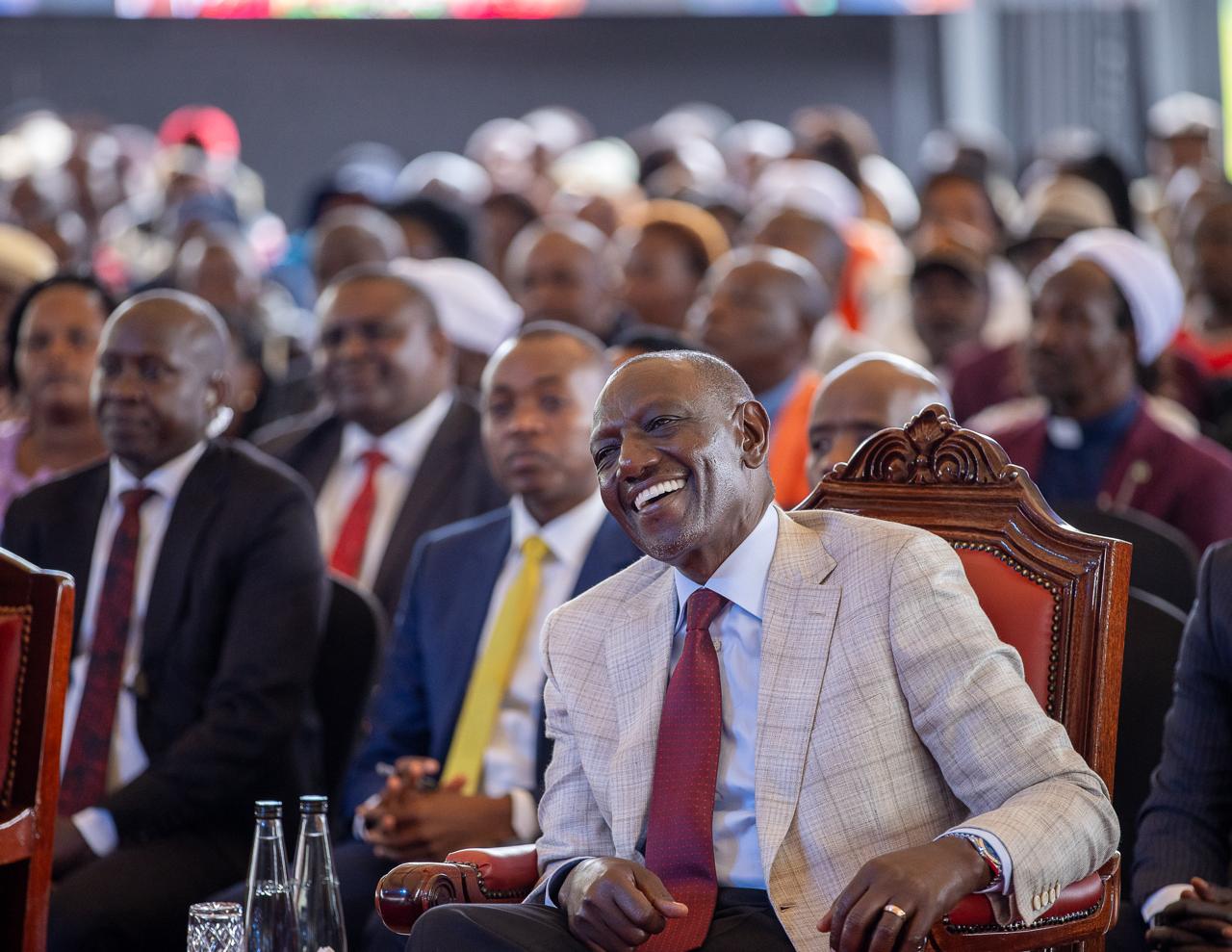
Ruto said the country had moved away from the economic pressure that marked the period after the Covid-19 shock, describing the current situation as one of recovery and growth.
President William Ruto has defended the state of the economy, saying key indicators have improved since 2022, with lower inflation, a steadier shilling, and reduced borrowing costs pointing to a more stable outlook.
Speaking on Wednesday during the Kirinyaga County Grassroots Leaders’ Meeting at State House in Nairobi, Ruto said the country had moved away from the economic pressure that marked the period after the Covid-19 shock, describing the current situation as one of recovery and growth.
“In 2022, Kenya’s economy was in a very difficult place. We had COVID-19, the economy had stalled, maize flour prices had increased, and inflation was at 9%. The dollar had reached nearly 160 shillings, and interest rates had gone up. It was being said that Kenya was among six countries likely to fail to service its debt,” he said.
He pointed to improvements in key measures, saying government action had helped restore stability. “Today, inflation is 4%, the dollar is Sh129, and interest rates are below 9%,” he said.
Ruto added that Kenya’s position globally had strengthened, noting a rise in economic ranking on the continent. “We have overtaken Ethiopia and Angola. We are now the sixth largest economy in Africa. Credit rating agencies say Kenya’s credit rating is higher and we are more creditworthy than before,” he said.
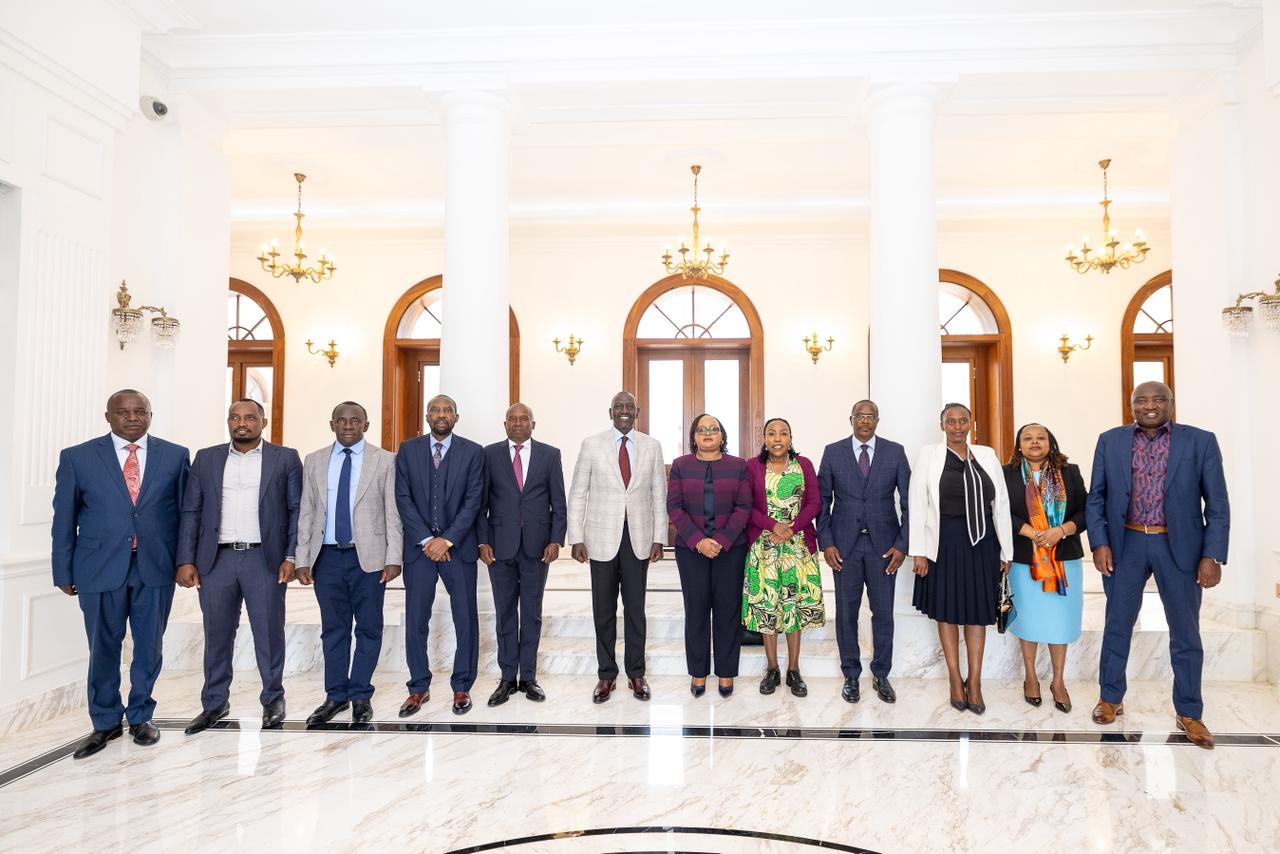 President William Ruto and DP Kithure Kindiki with Kirinyaga County Grassroots Leaders at State House, Nairobi on April 29, 2026 PHOTOS/PCS
Agriculture featured strongly in his address, with the President saying reforms had improved planning and boosted production. He said the government had completed farmer registration, bringing together data across sectors. “We have registered all farmers. We now have accurate data instead of guesswork. We have registered 7.2 million farmers across tea, coffee, rice, dairy, maize, and wheat,” he said.
He added that fertiliser prices had been standardised at Sh2,500 and that efforts were ongoing to remove brokers from farm markets. “We are fighting cartels and brokers who were exploiting farmers,” he said.
Output has also gone up, according to the President. “We used to produce 47 million bags of maize. Last year we produced 74 million bags. This year, God willing, we aim for 80 million bags,” he said, adding that maize flour prices had remained between Sh100 and Sh150.
He also highlighted gains in cash crops, saying tea earnings had grown from Sh140 billion to Sh215 billion, while sugar farmers were now paid weekly and coffee prices had improved to between Sh140 and Sh160.
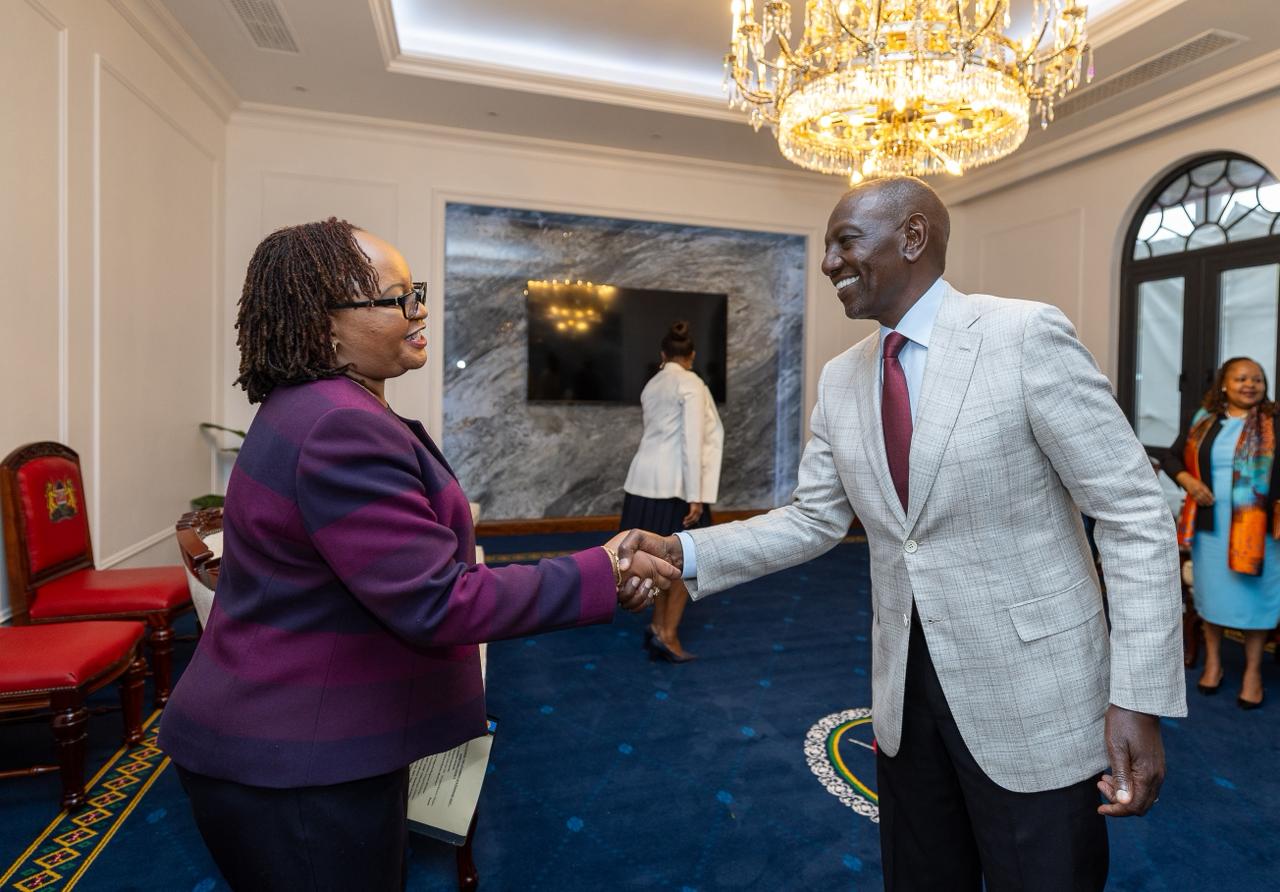 President William Ruto shakes hand with Kirinyaga Governor, Anne Waiguru during a meeting with Kirinyaga County Grassroots Leaders at State House, Nairobi on April 29, 2026 PHOTOS/PCS
On education, Ruto said long-standing gaps in staffing and infrastructure were being addressed. “We had a shortage of 116,000 teachers and challenges with classrooms and university funding. We have resolved the CBC system issues,” he said.
He noted that 100,000 teachers had already been hired, with another 20,000 set to join. “We have built 23,000 classrooms across the country, including 900 in Nairobi, and 45,000 children are now learning in improved facilities,” he said.
Funding for the sector has also risen from Sh500 billion in 2022 to Sh765 billion this year, with Sh23 billion recently released for capitation.
In healthcare, the President said reforms had widened access to insurance, replacing the old system with a broader scheme. “Previously, only 8 million people were covered under NHIF. Today, the Social Health Authority covers 30.7 million Kenyans,” he said, adding that efforts were ongoing to ease the burden of direct medical payments.
Ruto also linked job creation to housing projects, saying thousands of young people were now engaged in construction. “We have 640,000 young people working in housing projects. We are building 240,000 homes, including 4,000 in Kirinyaga, and constructing 600 markets across the country,” he said.
The meeting was attended by Deputy President Kithure Kindiki and Kirinyaga Governor Anne Waiguru, among other leaders, as the President outlined what he said were efforts to improve livelihoods and expand opportunities across the country.


Comments
Sign in with Google to comment, reply, and like comments.
Continue with Google